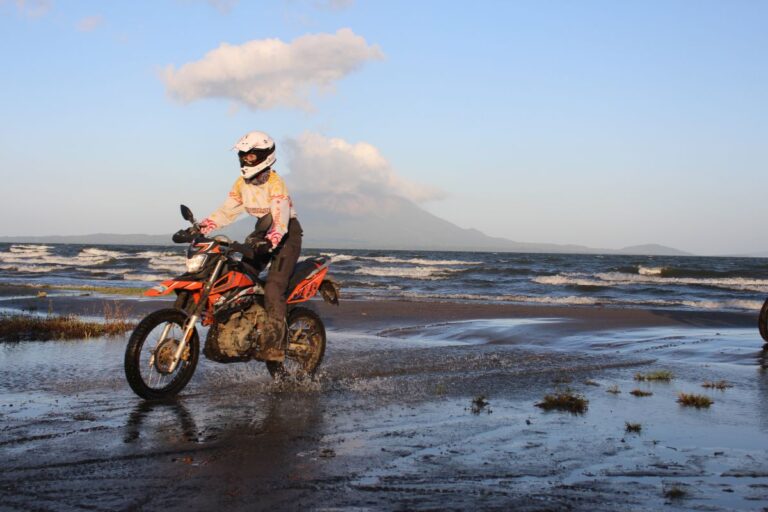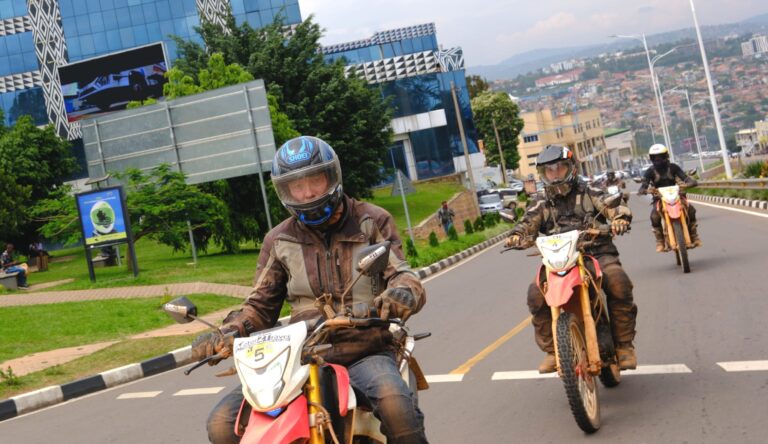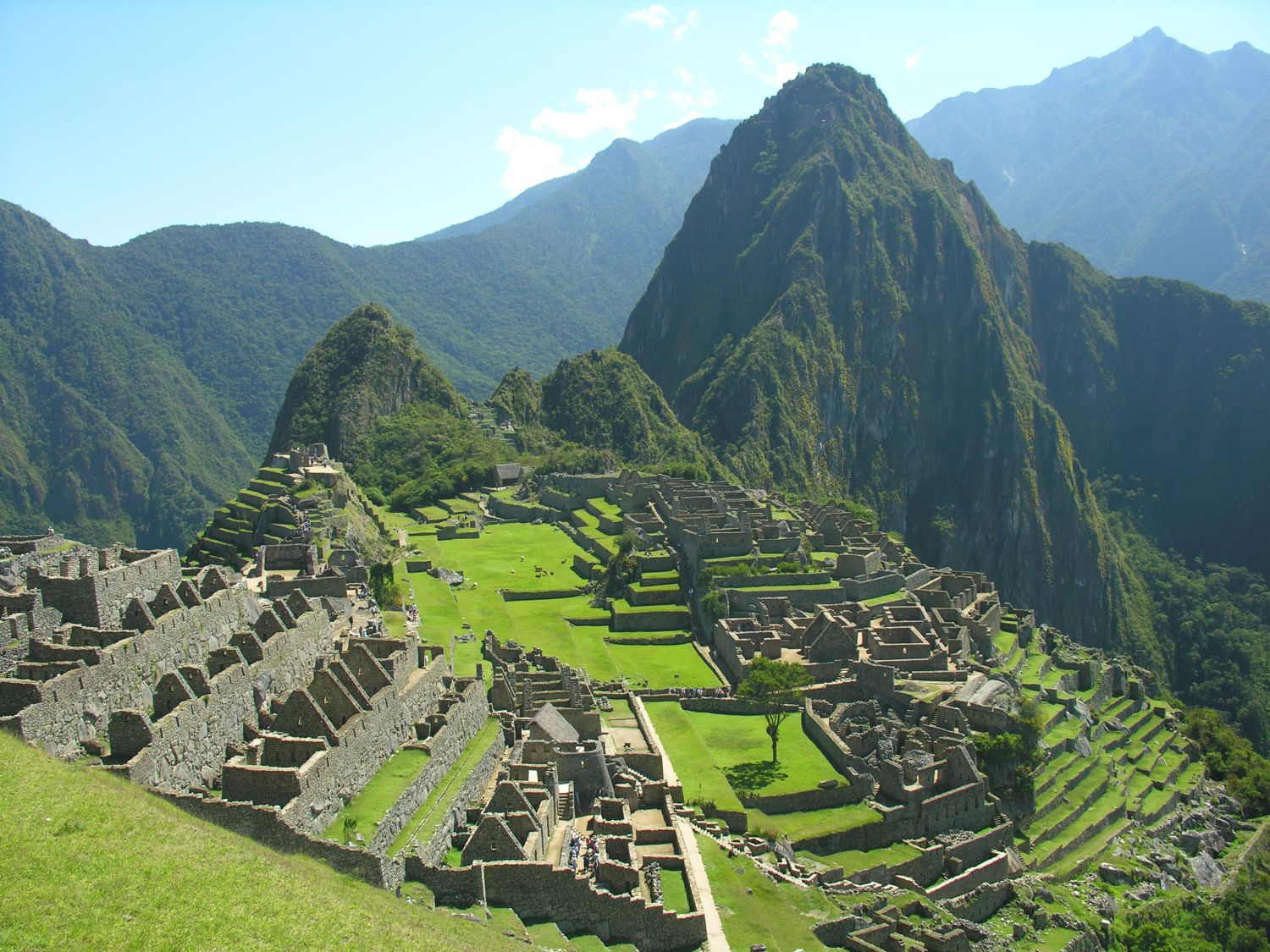

Desert, Pacific coastline, Andean passes rising above 4,000 metres, the Amazon lowlands and some of South America’s most famous cultural sites. On our 14 day Peru motorcycle tour, the scenery changes almost every day.
Dusty boots, the steady hum of your engine and a landscape so vast that it can take your breath away, even from behind your visor. If a holiday begins for you when the road turns into an endless succession of bends climbing through the Andes, then Motor2Travel has something worth considering: a 14 day motorcycle tour through Peru.
Peru is a country that is best experienced on two wheels. You feel every change in climate and altitude as you travel from the dry Pacific coast into the thin, cold air of the high Andes before descending towards the hot and humid Amazon lowlands.
And there is much more to this journey than Peru’s familiar postcard sights. Our route takes us beyond the obvious highlights and deeper into the landscapes, history and mysteries that have shaped this part of South America. From the enigmatic Nazca Lines and the shores of Lake Titicaca to the legacy of the Incas and Machu Picchu, this motorcycle journey reveals Peru one road at a time.
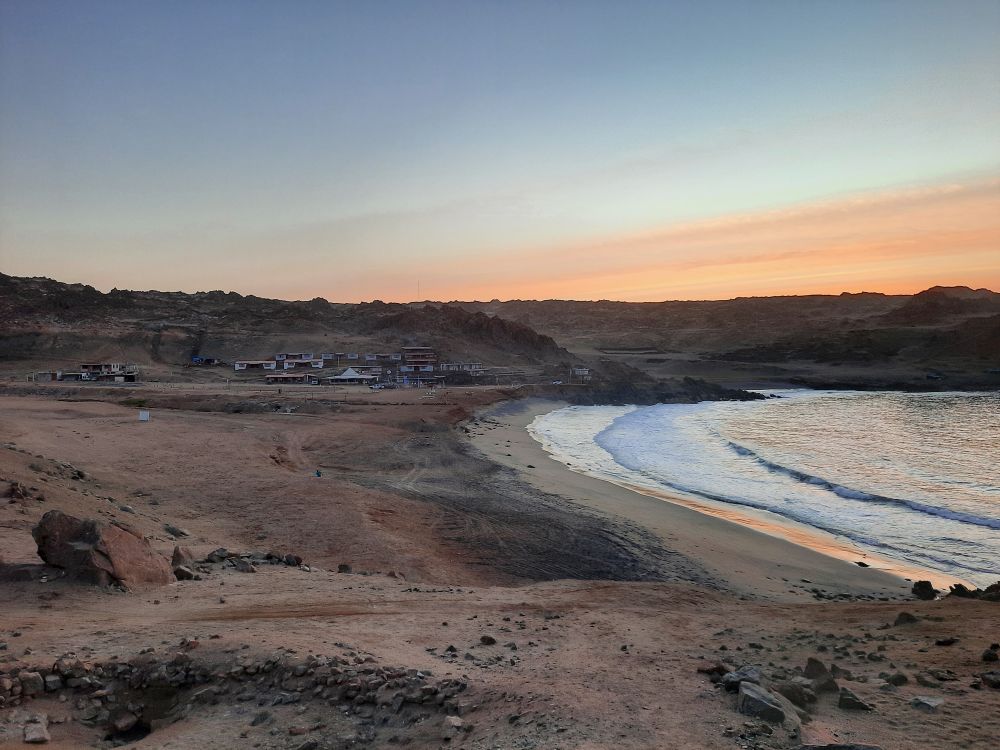
Our motorcycle tour in Peru doesn’t begin with normal sightseeing. Instead, we head straight into the heart of South America. Anyone who has ridden the Pan American Highway along Peru’s rugged Pacific coast knows what freedom feels like. To the left, the deep blue ocean. To the right, endless sand dunes that seem to shift with the wind.
The Pan American Highway is one of the world’s most famous long distance routes. Its network of roads stretches for around 30,000 kilometres, connecting Alaska with the southern tip of Argentina. Only between Panama and Colombia is the route interrupted by the Darién Gap.
In Peru, the Pan American Highway runs for more than 4,000 kilometres along the Pacific coast, passing through places such as Lima and Nasca. For us, however, it is not simply a road for covering as many kilometres as possible. It takes us through a landscape of desert, dunes and Pacific coastline before we turn inland near Nasca and later climb into the Andes.
After our first few days in the saddle, we reach the dusty desert of Nasca. From ground level, it looks like little more than a barren, rocky landscape. But the true mystery of this region only reveals itself when we leave the motorcycles behind for a bit and change our perspective. It’s time for a flight over the Nasca Lines – and believe us, it’s not for the faint-hearted, but it is an experience you’ll be talking about for a long time to come.
We swap our motorcycle helmets for headsets and climb aboard a small propeller plane. There is room for just two to four passengers, with everyone seated by a window. The engines roar, the pilot applies full power, we take off, and suddenly a vast prehistoric picture book unfolds beneath you. To give you the best possible view of the enormous geoglyphs – including the hummingbird, the monkey and the mysterious astronaut – the pilots perform some serious manoeuvres. The plane banks sharply to the left, makes a tight turn, levels out and then tilts to the right. It’s demanding not only for the person at the controls, but also for your sense of balance. The flight over the desert lasts around 30 minutes, giving every passenger the chance to admire and photograph the geoglyphs clearly from both sides of the plane. A real adrenaline rush that fits perfectly into our motorcycle road trip through Peru.
After landing, we wash down the dust of the desert with a cool drink and talk about the history of this place. Who carved these enormous lines into the ground more than 1,500 years ago – and, above all, why?
Scientists are still searching for answers today. Were the Nazca Lines a giant astronomical calendar? Part of a fertility ritual for the gods? Or perhaps even a landing strip for extraterrestrials, as one rather tongue in cheek theory suggests?
The fact that we can still admire the Nazca Lines today is largely thanks to one courageous German woman: Maria Reiche. In the 1940s, the mathematician ventured into the Peruvian desert armed with a broom. She swept the lines clean, measured them with centimetre precision and, almost single handedly, protected them from destruction.
Her legacy is now a UNESCO World Heritage Site and the reason we still find ourselves looking at these mysterious lines in amazement today.
Enough flying. The road is calling again! We leave the desert behind and climb steadily higher into the Andes on our motorcycles. No motorcycle tour in Peru would be complete without visiting the heart of the ancient Inca Empire. We point our bikes towards Cusco.
The former capital of the Inca Empire fascinates with its colonial buildings, constructed on top of massive, precisely cut Inca stone walls. From here, we make our way to the undisputed cultural highlight of our journey through South America: Machu Picchu.
Hidden among the clouds, perched on a mountain ridge and surrounded by steep green peaks, Machu Picchu has an almost magnetic appeal. The Inca built the city in the 15th century on a ridge in the Peruvian Andes, at an altitude of around 2,430 metres. To this day, its exact purpose remains unclear. It was probably a royal residence as well as a religious centre.
The Spanish never discovered Machu Picchu during their conquest of the Inca Empire, which is why much of the site remained preserved. Today, Machu Picchu is a UNESCO World Heritage Site and the best known archaeological site in Peru. When the morning mist begins to lift and the ruins slowly come into view, our motorcycle tour group usually falls silent for a moment.
After crossing the high mountain passes of the Andes, countless bends take us down into the Amazon lowlands, where Peru suddenly reveals a completely different side. The barren mountain landscape gives way to dense tropical vegetation. The air becomes warm and humid, parrots fly across the road, and bananas, palms and other tropical plants dominate the scenery.
The people and everyday life along the road also feel different from what we experienced up in the highlands. For a short while, it feels as if we have arrived in another country.
But Peru wouldn’t be Peru if the Andes weren’t already waiting beyond the next horizon. And so, following countless curves, we climb once again towards the highlands.
The air gets thinner, the landscape becomes more rugged, and suddenly there are alpacas standing by the roadside instead of warning signs. Our destination: the legendary Lake Titicaca.
At almost 4,000 metres above sea level, its deep blue waters shimmer in the intense Andean sunlight. Lake Titicaca lies between Peru and Bolivia and is the largest freshwater lake in South America.
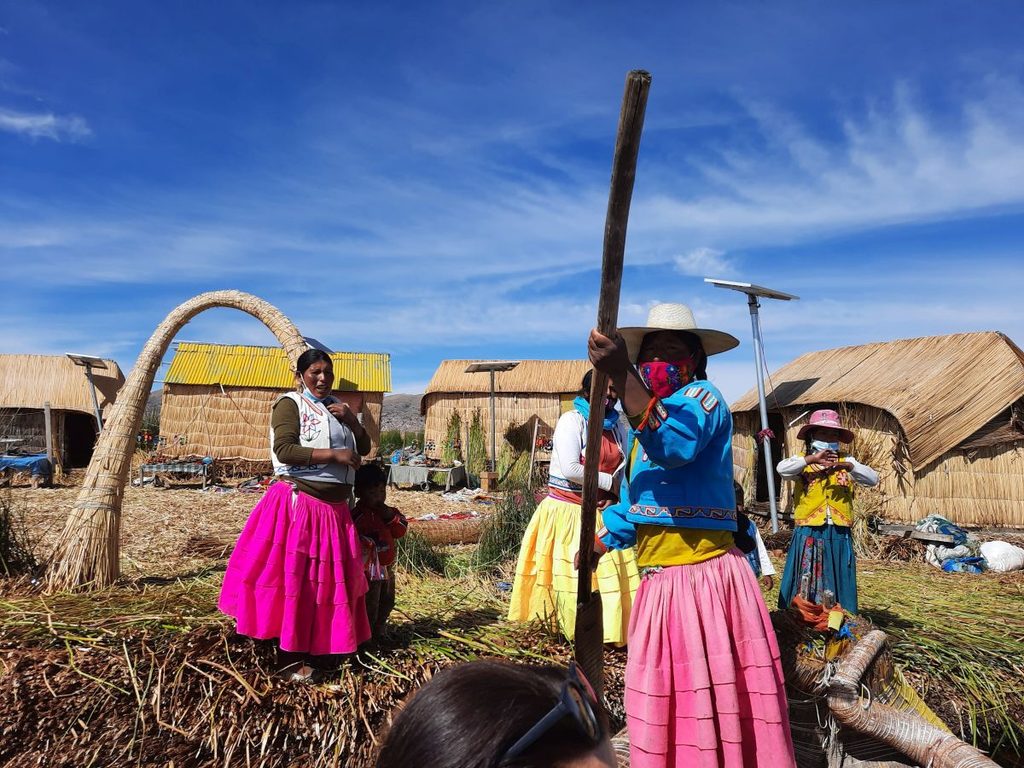
Here, we visit the floating Uros Islands, built entirely from totora reeds. It feels like stepping into a completely different world. Today, the islands near Puno attract many visitors, but they still offer an interesting insight into the history and traditions of the Uros people.
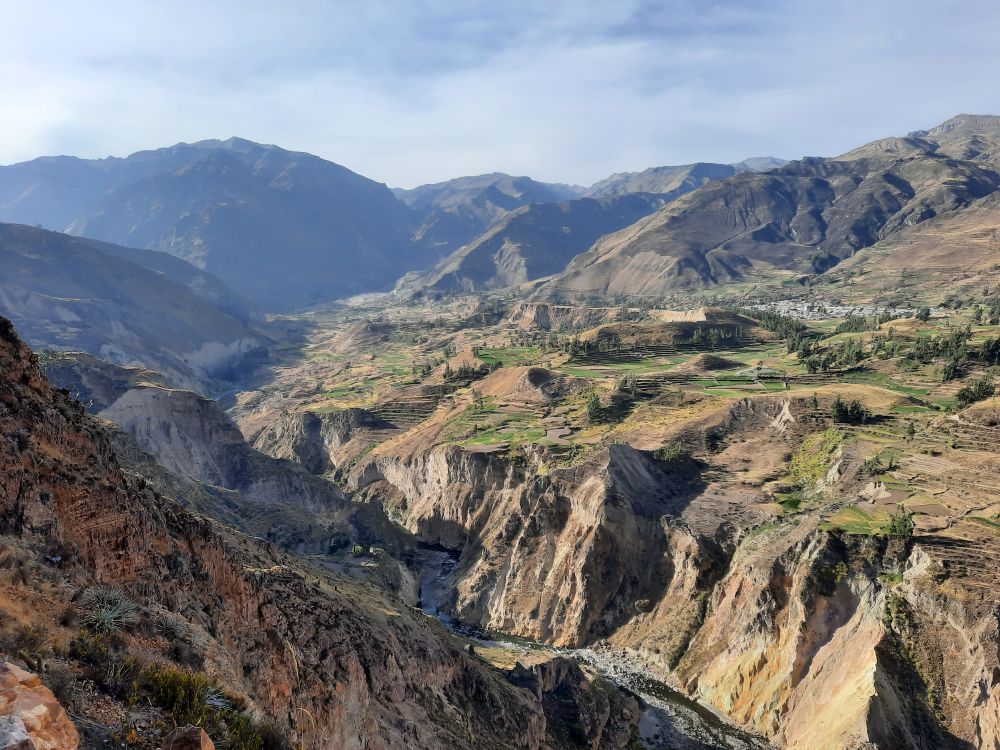
After the vast landscapes of the Altiplano, Peru reveals a different side at the Colca Canyon. Steep rock walls, centuries-old agricultural terraces and deep gorges shape the landscape. Winding through it all are roads that are a pleasure to explore by motorcycle.
But the Colca Canyon is best known for its Andean condors. With a wingspan of up to three metres, they are among the largest flying birds in the world. As the air warms in the morning, the condors take advantage of the rising thermals, soaring effortlessly above the canyon.
Peru is made for a motorcycle tour: Andean passes at over 4,000 metres, endless winding roads, desert landscapes, small mountain villages, a detour into the Amazon lowlands and some of South America’s best known cultural sites. We travel in small groups, accompanied by an experienced guide and a support vehicle. Your luggage travels in the vehicle, leaving you free to enjoy the ride.
14 days on a motorcycle tour through Peru. From the Pacific coast high into the Andes, with plenty of reasons to get off the bike and explore along the way.
Over de auteur

Motor2Travel develops and organizes adventurous motorcycle tours worldwide. Since 2006, they guide tours across the globe, using their experience to connect travellers with countries, cultures and local communities beyond the beaten track.
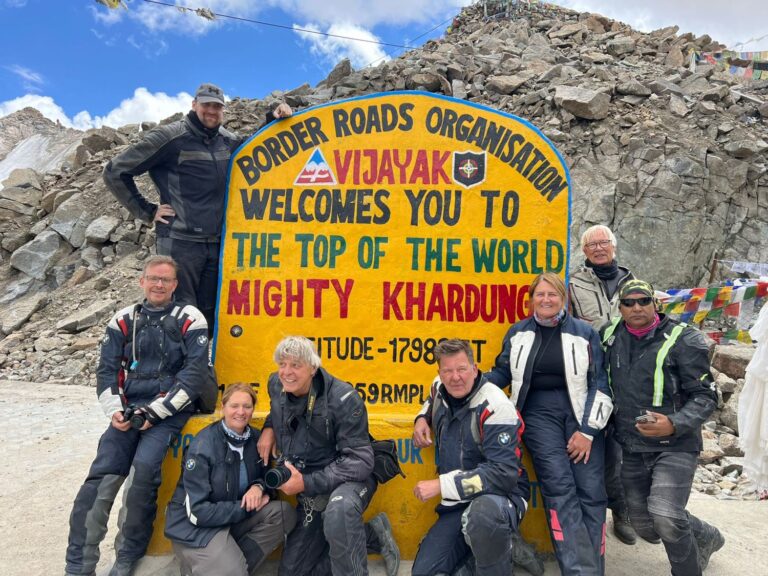
Dreaming of endless mountain switchbacks in the Himalayas or the Andes? At altitudes above 2,500 meters, altitude sickness can become an invisible passenger on your motorcycle adventure. This blog explains the causes and common symptoms of altitude sickness, along with practical tips to prevent it—from gradual acclimatization and proper hydration to the right nutrition. Discover how to ride safely and enjoy high-altitude motorcycle touring while protecting your health.
Unsere Reisepreise sind versichert