DE
DE
5(78 Reviews)

Who doesn’t dream of it? Endless mountain roads in Peru, the wind of the Andes on your face, or the vast solitude of the Himalayas. Motorcycle tours through these regions are among the most spectacular adventures you can experience on two wheels. But once you travel above 2,500 metres, you also gain an invisible passenger: altitude sickness. To make sure you don’t run out of breath halfway to the next mountain pass, here’s what you need to know and how to reduce the risk.
In short: Altitude sickness can occur from around 2,500 metres onwards. The risk increases when you gain altitude too quickly. For motorcycle riders in the Himalayas or the Andes, gradual acclimatisation, staying well hydrated and taking symptoms seriously are essential. A well planned route can support acclimatisation, but it cannot completely prevent altitude sickness.
Simply put, altitude sickness (also known as Acute Mountain Sickness or AMS) is your body’s response to a lack of oxygen. The higher you ride, the lower the air pressure becomes. The air is literally thinner, so every breath contains less oxygen. Your body tries to compensate by increasing your heart rate and making you breathe faster. If you climb too quickly without giving your body time to adapt, it starts to protest.
Altitude sickness can already develop from around 2,500 metres. Above approximately 3,000 metres, it is important to pay close attention to possible symptoms. How well someone copes with altitude varies greatly from person to person and has little to do with age or physical fitness. Even experienced and well trained motorcycle riders can develop altitude sickness.
The first signs are usually:
Nobody wants their once in a lifetime motorcycle adventure to be spoiled by altitude sickness, so recognising the early warning signs is important.
The good news is that you are not powerless. With the right approach before and during your trip, you can reduce the risk, although it can never be completely eliminated.
The biggest mistake in the mountains is climbing too fast. Riding from sea level straight to 4,000 metres is asking a lot from your body. The most important rule is simple: gain altitude gradually and increase your sleeping altitude step by step. Give your body time to adapt to the lower oxygen levels. A commonly used guideline is not to increase your sleeping altitude by more than 300 to 500 metres per day once you are above 3,000 metres.
At high altitude, your digestive system slows down because your body needs its energy for more important tasks, such as breathing and keeping your heart working efficiently. Heavy, fatty meals can leave you feeling sluggish. Instead, choose easily digestible foods that are rich in carbohydrates. Pasta, rice, potatoes, lentils, soups and bananas provide energy without overloading your stomach.
After a long day in the saddle, it is tempting to celebrate reaching a mountain pass with a beer or a local cocktail. At high altitude, however, it is better to avoid alcohol for a few days. Alcohol contributes to dehydration, which is already a concern in the dry mountain air. It also suppresses your breathing while you sleep, reducing your oxygen intake even further. Instead, drink plenty of water or local tea, such as coca tea in Peru or ginger tea in the Himalayas.
If you experience symptoms, take them seriously and inform your tour leader. The first rule is simple: do not continue to a higher altitude and monitor how you feel. Our accommodation in the higher regions is equipped with oxygen, which is available if needed. Participants can also travel in the support vehicle whenever necessary. If symptoms become more severe or continue to worsen, descending to a lower altitude is the most important step. As you descend, oxygen levels increase and your body can recover more easily.
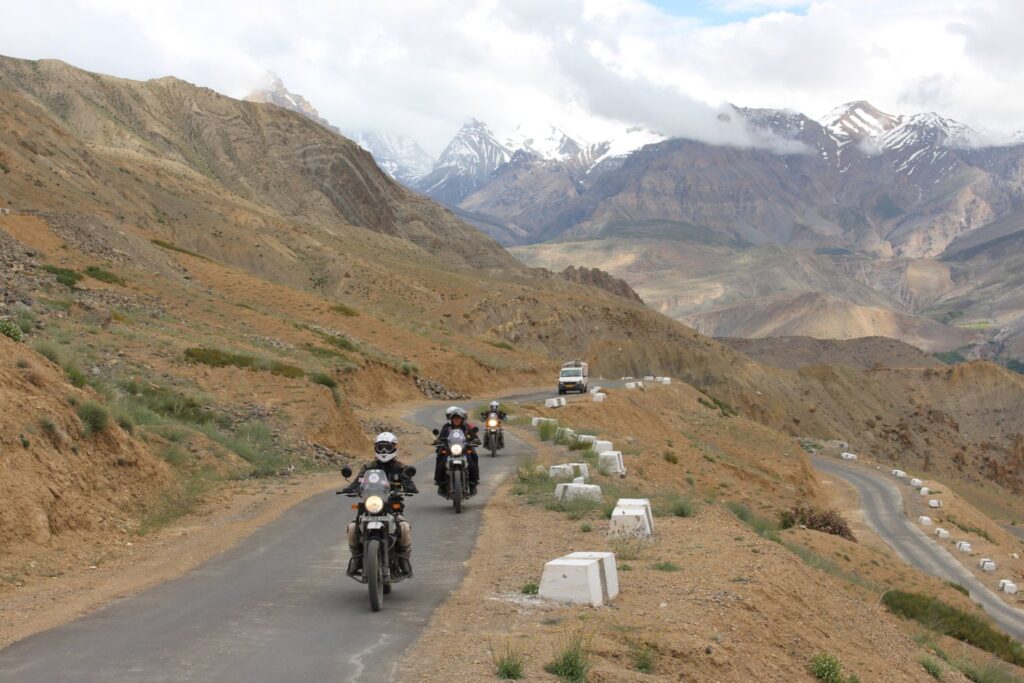
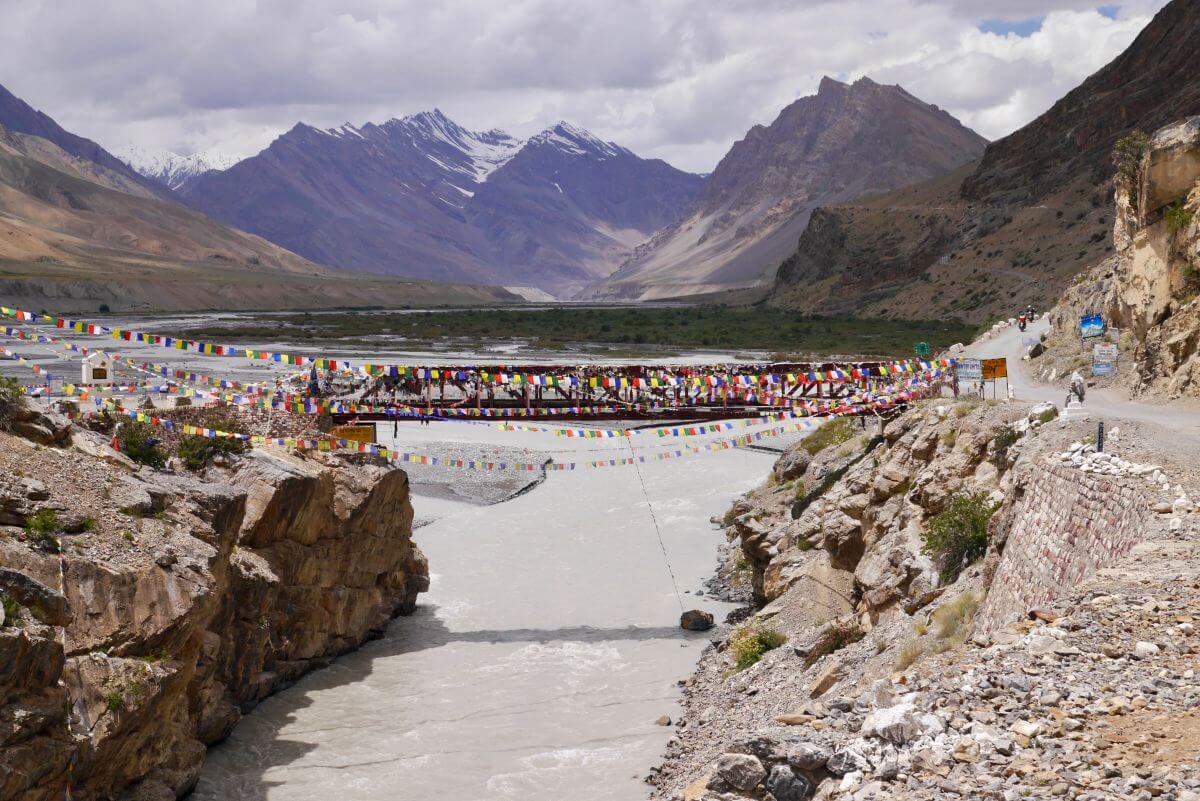
Theory is one thing. Good route planning is even more important. That is exactly why we designed our guided motorcycle tour through the Spiti Valley and Ladakh to gain altitude gradually. The Spiti Valley itself is already one of the highlights of the journey. Instead of starting in Leh at around 3,500 metres, we begin in Chandigarh at only 350 metres above sea level. From there we ride via Shimla at approximately 2,276 metres. Only after six days we spend the night in the Spiti Valley at around 3,660 metres. This gradual ascent gives the body several days to acclimatise before we reach the highest mountain passes of the Himalayas. This carefully planned route supports acclimatisation and helps reduce the risk of altitude related problems, leaving you free to enjoy what this journey is really about: riding incredible roads, experiencing the Himalayan mountains and meeting the people along the way.
From our experience organising motorcycle tours in both the Himalayas and the Andes, we know that the maximum altitude is only part of the story. Just as important is how quickly you reach that altitude and at what elevation you sleep. So far, none of our participants has had to end a tour because of altitude sickness.
Would you like to ride through some of the highest mountain regions in the world? Discover our guided India Himalaya Spiti & Ladakh Motorcycle Tour or our Peru Inca Motorcycle Tour through the Andes.
Over de auteur

Motor2Travel develops and organizes adventurous motorcycle tours worldwide. Since 2006, they guide tours across the globe, using their experience to connect travellers with countries, cultures and local communities beyond the beaten track.
Unsere Reisepreise sind versichert